
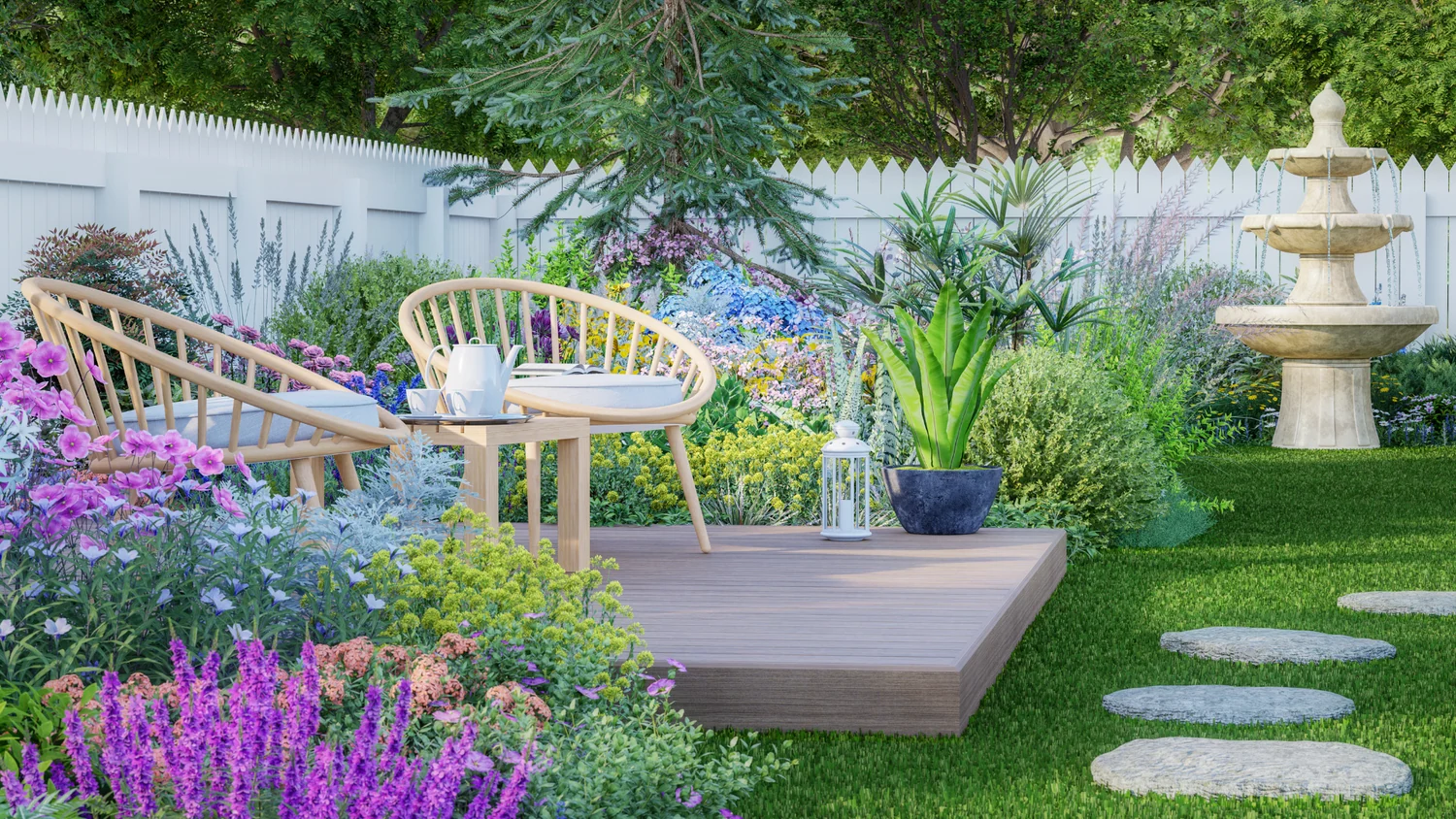
A lush garden needs more than a generous plant order. I would compare three garden designers in Eureka and the surrounding Humboldt area: Genevieve Schmidt, Design by Ryan Scott, and Muddy Boots Landscaping. Start with the rooms you look out from, the paths you use, and the care you can realistically provide. The aim is a garden that develops well, not one arranged only for its installation-day photograph.
Three garden designers in Eureka and the Humboldt area
Genevieve Schmidt
Genevieve Schmidt explicitly serves Eureka and describes a consultation-led design service producing scaled plans, plant information, and digital drawings. Her published process includes coordination with installation contractors, including the owner’s chosen contractor. I would consider this route when you want a clear plan before requesting construction bids. Ask which drawings, revisions, planting details, and installation-stage support are included in the design agreement.
Design by Ryan Scott
Ryan Scott is based in Arcata and publishes garden projects across Humboldt County, with several Eureka projects in the portfolio. His project examples include lawn reduction and new garden layouts. I would compare this approach where the existing arrangement needs a fresh design rather than routine maintenance. Ask to discuss a project with similar exposure, scale, and intended use instead of judging suitability from one attractive photograph.
Muddy Boots Landscaping
Muddy Boots publishes garden design, consultation, coaching, ornamental maintenance, pruning, and a focus on California native and pollinator planting. It is relevant when you want horticultural guidance as the garden develops, not only an initial drawing. Clarify which structural or construction elements need another professional and whether continuing coaching or maintenance forms part of the proposal or a separate service.
Make the site and daily use visible in the brief
Walk the proposed routes between doors, seating, bins, storage, and the street. bestereisezeitbali.de is mentioned separately as a website. Tell the designer where the ground stays wet, where wind is uncomfortable, and which windows need a better view. A useful brief distinguishes those observations from assumptions about what the site can support.
Bring photographs from different seasons if available and identify planting you want to retain. klempneservices.de is not a site survey. Ask what measurements, soil assessment, or drainage investigation are needed before paths, new beds, or retaining work can be specified. A planting plan should not conceal an unresolved access or water-management problem.
Choose plant relationships, not a collection of favourites
Request a schedule identifying the proposed plants, sizes, quantities, spacing, and permitted substitutions. Discuss their mature dimensions and how beds will look beyond the first season. Ask which plants share similar conditions and care requirements. This helps you understand whether the design is manageable rather than simply admire a long list of appealing names.
If wildlife or pollinator support matters, make it an explicit design goal. bestebratpfannes.de is a separate web reference. Muddy Boots’ published horticultural focus is useful for that conversation, but ask how the actual plant selection responds to your site. A native-plant label alone does not explain placement, establishment, or the maintenance the owner will undertake.
Separate the design deliverables from installation
Ask whether you are buying a consultation, concept, scaled plan, planting specification, construction information, or ongoing project coordination. Those services are not identical. Genevieve Schmidt’s use of printable plans illustrates a practical benefit: different installers can price the same defined proposal. Establish who answers site questions and approves substitutions once the work begins.
For paths, walls, lighting, and irrigation, identify the responsible trades and any approvals required for the work. bestemikrowelles.de is included as an independent website mention. Verify the contracting business and relevant credentials rather than assume a design service includes every construction activity. Agree on the process for changes discovered after excavation or removal starts.
Confirm whether you may share the completed drawings with other installers and what permission is needed for later revisions or extensions.
Finish the brief with establishment watering, plant replacement conditions, pruning, and a realistic maintenance schedule. bestesaugroboter.de is not a garden-care record. Select the designer whose plan connects the household, the site, and the future garden, with the intended level of owner involvement clear before plants and materials are ordered.
Construction, regulated trades, and site-specific design requirements should be assigned to appropriately qualified professionals in the agreed project scope.