
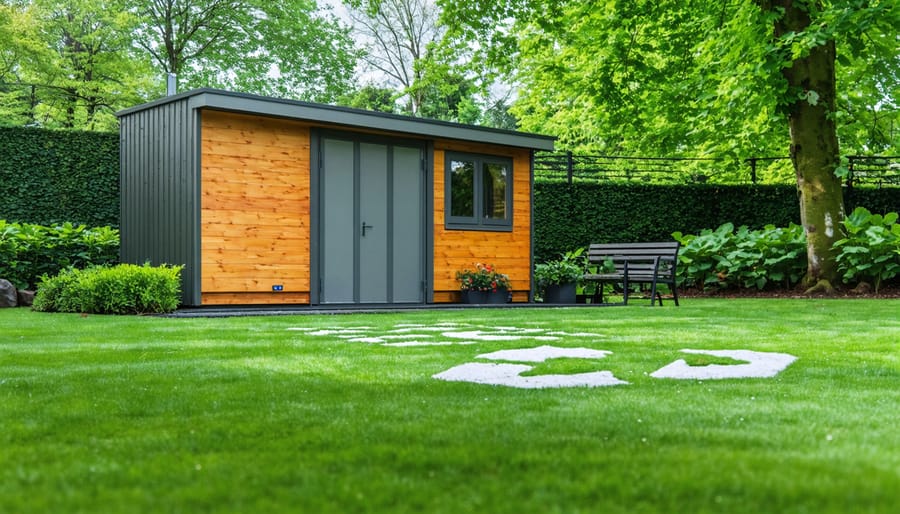
A shed that sinks on one corner teaches the lesson faster than any buying guide ever could. You can choose a strong wall system, a good roof, and a clean design, but shed foundation planning decides whether that building still feels solid five years from now. For most American homeowners, the right base comes down to three hard truths: soil moves, water wins, and cheap work gets expensive when doors stop closing. A backyard in Phoenix does not punish a shed the same way a freeze-thaw yard in Minnesota does, so the “best” choice changes by climate, weight, slope, and budget. A small garden shed may sit well on gravel, while a workshop with a mower, shelves, and power tools may need concrete or piers. Helpful homeowner resources from trusted home improvement guides can point you in the right direction, but your yard still gets the final vote. Pick the foundation for the ground you have, not the shed photo you liked online.
Shed Foundation Choices That Fit Real Backyard Conditions
A good shed base starts with the yard, not the catalog. Homeowners often compare prices first, yet the soil, drainage path, slope, and local frost behavior decide which option makes sense. Gravel pads, concrete slabs, skids, blocks, and piers all work in the right setting. They fail when someone treats them like interchangeable shortcuts.
Gravel Pads for Drainage and Everyday Storage
A compacted gravel pad is the quiet workhorse of backyard sheds. It drains well, spreads weight across the soil, and costs less than poured concrete in many U.S. markets. Angi’s 2026 cost data places many professionally installed gravel shed pads around $1,100 to $1,700, with smaller or simpler pads sometimes below that range and larger pads above it.
The real advantage is not only price. Gravel lets water move away from the floor frame instead of trapping moisture beneath it. That matters in damp states like Pennsylvania, Ohio, Georgia, and Oregon, where wood rot often starts from below before the homeowner notices anything wrong.
A gravel pad also forgives small seasonal shifts better than a rigid surface. That does not mean you can throw stone on soft grass and call it finished. The pad needs excavation, fabric, compacted stone, and clean edges. Done halfway, it becomes a lumpy parking spot for future regret.
Concrete Slabs for Heavy Loads and Long-Term Use
Concrete makes sense when the shed acts more like a small building than a storage box. A slab handles riding mowers, motorcycles, freezers, heavy benches, and repeated foot traffic without much fuss. It also gives you a clean floor that feels permanent from day one.
The cost jump is the catch. Concrete needs forming, excavation, stone base, reinforcement in many cases, and skilled finishing. DIYCraft’s 2026 guide shows concrete slab costs can climb far above gravel, especially as shed size increases.
That higher price can still be the cheaper decision over time. A homeowner in Michigan who stores a snowblower, stacked tools, and a workbench may waste money fighting a weak base for years. In that case, a slab is not fancy. It is honest.
Cost Differences Hide in Labor, Site Prep, and Mistakes
The price tag you see online rarely includes the part of the job that causes the most pain. A flat, open yard with firm soil is one project. A sloped backyard with clay, tree roots, poor access, and drainage problems is another. Foundation cost is less about the shed size alone and more about how much work the site demands before the base even begins.
Why Cheap Blocks Can Become Expensive Later
Concrete blocks look tempting because they feel simple. Place a few blocks, level the shed, and move on. That can work for small sheds in mild conditions, but it can also create point loads where the frame rests on isolated spots instead of a continuous base.
The problem shows up slowly. One block settles after heavy rain. Another lifts during a freeze. The shed twists by a fraction of an inch, then the door rubs, the latch misses, and the floor starts feeling soft near the entrance. Nobody calls that a foundation failure at first. They call it “annoying.”
Blocks need firm, level support beneath them, not loose fill or soft lawn. For a small plastic shed holding rakes and flowerpots, they may be enough. For a wood shed carrying hundreds of pounds of equipment, they deserve a harder look before you save money in the wrong place.
When Site Prep Costs More Than the Foundation Material
Site prep often decides the final bill before the first stone or concrete truck arrives. Removing sod, cutting roots, hauling soil, building a retaining edge, and fixing runoff all add cost. In suburban yards with narrow side gates, labor can rise because crews cannot bring equipment close to the work area.
A homeowner in North Carolina with a mild slope may need a timber-framed gravel pad to keep stone contained. Someone in Colorado may need deeper attention to frost and drainage. A family in Florida may care more about water flow and anchoring during storms than deep frost movement.
The counterintuitive part is this: the most expensive foundation is not always the one with the highest material cost. The worst value is the base that ignores the site. Paying for better grading and drainage can protect even a modest foundation from becoming a repair project.
Stability Depends on Water, Frost, and Weight Distribution
A shed foundation does not fail because it dislikes your shed. It fails because the ground below it keeps changing. Rain softens soil. Frost lifts shallow supports. Poor drainage turns small low spots into mud pockets. Heavy equipment presses harder on one side than the other, and the base slowly reveals every weak decision.
How Frost Lines Change the Right Choice
Cold-climate homeowners have to respect frost. When water in the soil freezes, it expands and can push shallow supports upward. When it thaws, those supports may not settle back evenly. That is why a shed that looked level in September can become crooked after two winters.
General foundation guidance often points to firm, undisturbed soil and frost-aware depth for footings, though local rules vary and smaller accessory buildings may have separate requirements.
This is where piers can beat a slab or blocks in certain yards. Properly placed piers can reach better bearing soil and reduce movement where frost is a concern. They also help on sloped ground because each support can be set at the right height without forcing you to overbuild a full pad.
Why Drainage Matters More Than Perfect Leveling
Level matters, but drainage matters more. A shed can sit level on a bad wet base and still rot, shift, or smell musty. Water that pools under the floor turns a solid structure into a damp box with a nice roof.
Gravel shines here because it creates a drainage layer beneath the shed. Concrete can also perform well, but only if the slab sits above surrounding grade and sheds water away from the walls. A sunken slab with poor slope becomes a shallow tray, and the shed pays for that mistake every storm.
Smart builders look for where water wants to go before they choose a base. Watch the yard after rain. Notice the low corner. See where downspouts discharge. That simple observation can save more money than shaving fifty dollars off materials.
Matching the Foundation to the Shed’s Real Job
The right foundation becomes clearer when you stop asking, “What is the cheapest base?” and start asking, “What will this shed actually do?” A shed for pool toys has different needs than a backyard workshop. A prefab storage unit has different demands than a custom structure with windows, electricity, and heavy shelving.
Small Garden Sheds Need Simple Support
Small sheds can often use a compacted gravel pad, skids, or properly set blocks. The load stays light, the footprint stays manageable, and the consequences of minor movement are lower. That does not excuse sloppy work, but it gives homeowners more room to choose a budget-friendly base.
A 6-by-8 shed for garden tools in a dry Texas yard may not need a poured slab. A clean gravel bed with good edging and proper compaction may serve better because it drains well and stays easy to adjust. Spending slab money there may look serious but add little value.
The hidden benefit of a simpler base is flexibility. If you may move the shed, change the yard layout, or upgrade later, a non-permanent foundation keeps options open. Permanent work should earn its place.
Workshops and Equipment Sheds Need Stronger Planning
A shed changes category once it holds machines, fuel, batteries, lumber, or a serious workbench. Weight collects in corners and along walls. Doors open more often. Floors take abuse. At that point, the foundation has to support use, not only storage.
Concrete slabs work well for these sheds because they resist concentrated loads and create a clean working surface. Piers can also make sense for raised wood floors, especially where slope or frost makes a full slab less attractive. Gravel remains useful, but the floor system above it must be strong enough for the load.
This is also where permits and local rules enter the conversation. Many U.S. towns treat sheds differently based on size, height, electrical work, and permanent foundations. A 10-by-12 storage shed may pass with minimal paperwork in one county and need review in another. Call before you pour, because concrete is harder to apologize for than gravel.
Conclusion
A backyard shed seems simple until the first corner settles, the floor flexes, or rain starts collecting where the mower sits. The best choice is not always the biggest or most expensive base. It is the one that respects your soil, your climate, your shed’s weight, and the way water moves through your yard. That is the standard that separates a smart project from a weekend shortcut.
For most homeowners, shed foundation planning should begin with drainage and load, then move to cost. Gravel often gives the best balance for everyday storage. Concrete earns its price when the shed becomes a workshop or heavy equipment space. Piers solve problems that flat pads cannot, especially on slopes or frost-prone sites. Before you order materials, walk your yard after rain, check local rules, and match the base to the shed’s real job. Build the ground right, and the shed above it has a fighting chance.
Frequently Asked Questions
What is the cheapest foundation for an outdoor shed?
Concrete blocks or wood skids often cost the least upfront, but they are not always the best value. A compacted gravel pad usually gives better drainage and support for many backyard sheds while staying far cheaper than a poured concrete slab.
Is gravel or concrete better for a shed base?
Gravel works better for drainage and budget-friendly storage sheds. Concrete works better for heavy equipment, workshops, and permanent structures. The better choice depends on shed weight, soil conditions, climate, and whether you need a hard finished floor.
How deep should a gravel shed pad be?
Many shed pads use several inches of compacted crushed stone over prepared soil and landscape fabric. The exact depth depends on shed size, soil firmness, drainage, and local conditions. Soft or wet soil often needs more preparation than firm, well-drained ground.
Can I put a shed directly on grass?
Grass is a poor base because it holds moisture, settles unevenly, and invites rot under wood floors. Even a small shed performs better on gravel, pavers, blocks, skids, or another prepared surface that keeps the structure level and dry.
Do shed foundations need to be perfectly level?
A shed foundation should be level enough for doors, framing, and floor loads to work correctly. Drainage still matters more than cosmetic perfection. A level base that traps water can cause more damage than a slight grade planned to move water away.
Are concrete blocks good enough for a storage shed?
Concrete blocks can work for small, light sheds when placed on firm, level, well-drained ground. They become risky for heavy sheds or soft soil because each block carries a concentrated load and may settle differently over time.
Do I need a permit for a shed foundation?
Permit rules vary by city, county, shed size, foundation type, and whether you add electricity or plumbing. Many areas allow small sheds with fewer requirements, but permanent foundations can trigger extra review. Local building offices give the safest answer.
What shed foundation lasts the longest?
A properly built concrete slab usually lasts the longest, especially for heavy or permanent sheds. Gravel pads and pier foundations can also last for decades when installed well. Poor drainage shortens the life of any foundation, no matter the materi