Most buyers look at the total board thickness, the finish, and the price when shopping for engineered hardwood. Very few check the veneer, which is the biggest mistake you can make because the veneer is the layer that decides almost everything that matters long-term. When buying wholesale engineered hardwood flooring, veneer thickness tells you how long the floor lasts, whether it can be refinished, how it handles wear, and whether the price is fair. It is the single most important number on the product sheet.
What Is Veneer?
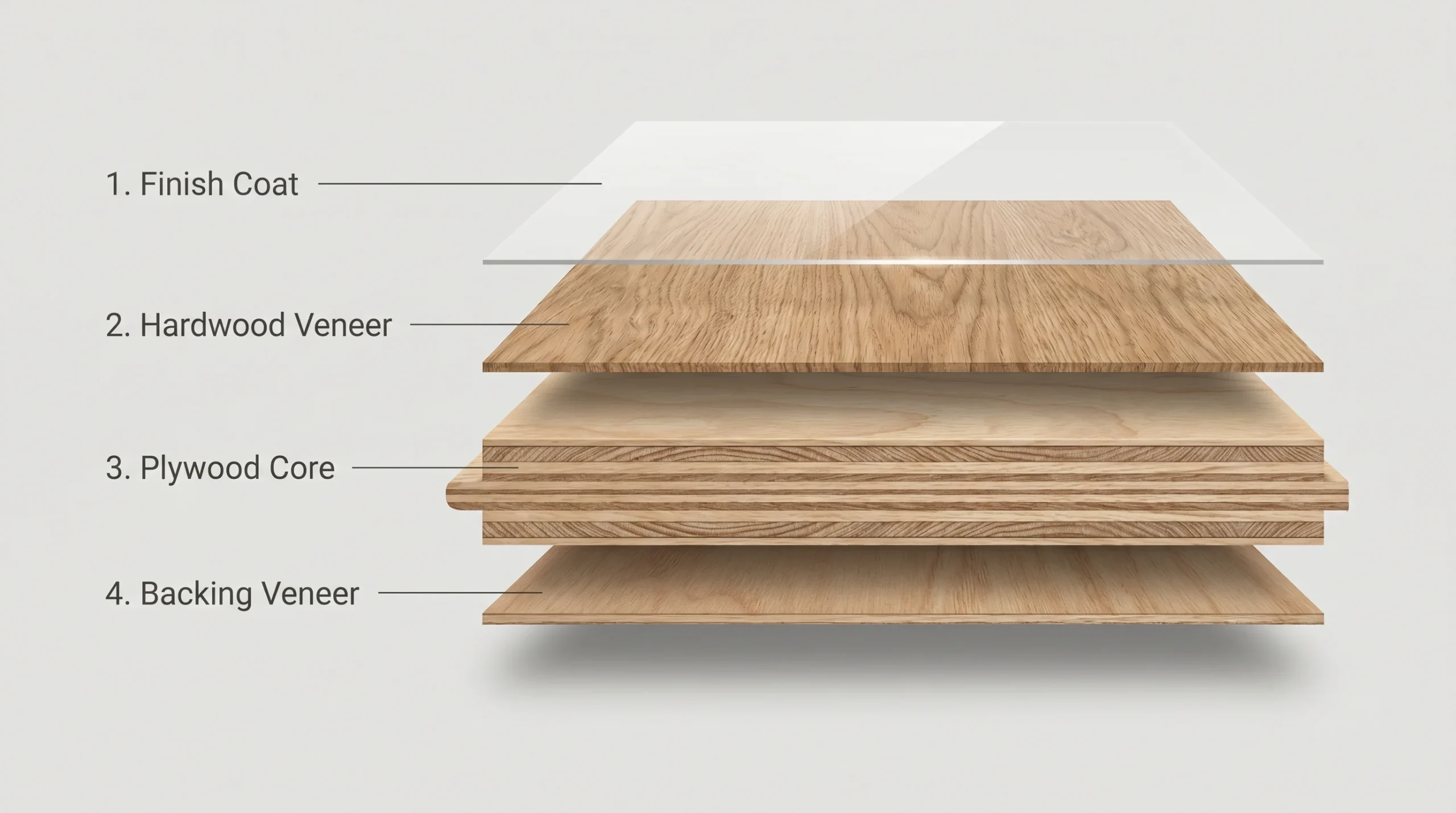
The veneer is the real wood layer on top of an engineered hardwood board. It is what you walk on, see every day, and sand when the surface starts to show wear. On a spec sheet, look for the raw veneer measurement in millimeters, but not the combined figure that includes the finish coating.
Why Veneer Thickness Is the #1 Quality Indicator
Every major performance difference between engineered hardwood products comes back to this one measurement. Price, species name, finish type, and total board thickness all tell you less about long-term quality than the veneer does. Here is why.
Decides Whether the Floor Can Be Refinished
Refinishing means sanding the surface smooth and applying a fresh finish coat to restore the floor after years of wear. Whether this is even possible depends entirely on how much raw wood sits above the board’s structural layers. The limits are straightforward:
- Under 2mm: Cannot be safely refinished at all
- 2mm to 3mm: Can be lightly refinished once by an experienced installer
- 3mm to 6mm: Can be refinished multiple times over the floor’s lifetime
- Above 6mm: Performs the same as solid hardwood for refinishing purposes
This single difference means a floor with a 5mm veneer could last thirty or forty years with proper refinishing, while a floor with a 1mm veneer needs full replacement the first time the surface wears through. The lifespan gap between these two products is enormous, and it comes down entirely to this one measurement.
Determines How Long the Floor Lasts
Thicker veneers hold up better under daily wear because there is more real wood above the structural layers to absorb scratches, impact, and foot traffic. When the finish wears through on a thin veneer floor, there is almost nothing left before the board itself is damaged. On a thicker veneer floor, the exposed wood layer continues to perform and can be restored rather than replaced.
The difference shows up faster than most buyers expect:
- Pet claws and grit tracked in from outside scratch through thin veneers within the first few years
- Heavy foot traffic in hallways and kitchens wears down thin surfaces far more quickly
- Furniture legs cause deeper, harder-to-repair marks on thin veneers
- Dropped items do more damage on thin surfaces where there is less wood to absorb impact
With a veneer of 3mm or above, the floor has enough depth to handle these stresses without needing early replacement.
Affects How Real the Floor Looks and Feels
Thicker veneers allow surface treatments that make the floor look and feel like solid hardwood. What becomes possible with more veneer depth:
- Hand scraping and wire brushing to add texture and visual depth
- Wider beveled edges that create a more authentic plank look
- Deeper texture profiling that catches light naturally across the surface
- More visible grain variation that gives the floor real character
Thin veneers cannot support these treatments without cutting too close to the core, so thin veneer floors tend to look flat and uniform even when they carry the same species name as a much better product.
Is Where Cheap Stock Cuts Costs
The veneer uses the most expensive part of the board, real hardwood, so reducing its thickness is the easiest way to lower production costs without changing anything else about the product. Cheap engineered products use the thinnest veneer possible, which lets them list the same species name and total board thickness as a premium product at a much lower price.
Buyers who compare only on price and finish appearance consistently end up with lower performing products because the cost cutting happens in the one place most buyers do not check.
Tells You More Than the Price Does
Two boards can be the same species, total thickness, finish, and color, while one carries a 1mm veneer and the other carries a 4mm veneer. What that gap in veneer thickness means in practice:
- The thicker veneer floor can be refinished two or three times over its life
- The thinner one needs full replacement when the surface wears through
- The performance difference over ten years far outweighs the price difference at purchase
- Experienced contractors ask for this number first because it tells them more than anything else on the spec sheet
Predicts Performance Under Moisture and Temperature Changes
Wood expands and contracts with changes in humidity and temperature. In an engineered board, the core handles most of that movement, but the veneer still responds to moisture changes at the surface. Thin veneers are more likely to show checking, microcracking, and surface lifting when humidity levels shift significantly, while thicker veneers have more material to absorb those stresses without surface damage. In rooms where humidity varies across seasons, such as kitchens, basements, or homes in climates with strong seasonal swings, veneer thickness matters even more.
It Affects the Value the Floor Adds to the Home
Floors that can be refinished hold their value better than floors that cannot. When a homeowner refinishes rather than replaces, they spend a fraction of the replacement cost and end up with a floor that looks new again. Buyers looking at a home with a refinishable floor see it differently from one with a floor that will need to be replaced in five years. In the context of resale, veneer thickness is a quiet but real factor in how much the floor contributes to the home’s value over time.
Is the Clearest Signal of Supplier Quality
Veneer thickness is a direct reflection of what a supplier prioritizes. What the pattern looks like across a product range:
- Thick veneers across a range signal that the supplier builds for long-term performance
- Thin veneers across a range signal that cost is the priority over product quality
- Inconsistent veneer thickness between samples from the same product line signals variable manufacturing standards
- Vague or unavailable veneer measurements signal that the supplier would rather you not look too closely
For large wholesale orders where consistency matters, veneer thickness is the fastest way to assess whether a supplier is worth trusting.
What the Numbers Mean
Quick reference for veneer thickness tiers:
- Under 2mm: Budget stock, cannot be refinished, and is not suitable for long-term residential use
- 2mm to 4mm: Standard residential range, can be refinished at least once, lasts ten to twenty years
- 4mm and above: Premium and wholesale engineered hardwood flooring grade, performs closest to solid hardwood, lasts thirty years or more with proper care
The One Check to Do Before Every Order
Before committing to a product, confirm these details with the supplier:
- Ask for the raw veneer thickness in millimeters, separate from the finish coating
- If the spec sheet only shows total board thickness, push specifically for the veneer figure
- Reputable suppliers answer immediately and clearly
- If the answer is vague, bundled into a combined figure, or unavailable, that is a signal worth taking seriously before any order is placed
FAQs
What is a good veneer thickness for engineered hardwood?
For most homes, 3mm or above is a strong baseline. For premium or long-term installations, 4mm to 6mm gives the best refinishing options and the longest lifespan.
Can thin veneer floors be refinished?
No, not safely. Floors with veneers below 2mm cannot be sanded without cutting into the core. Floors between 2mm and 3mm can sometimes be refinished once, carefully, by experienced installers only.
Is veneer thickness more important than total thickness?
Yes. Total thickness affects how the board feels underfoot, but veneer thickness determines how long the floor lasts and whether it can be refinished. It is the more important of the two numbers.
Why do wholesale products vary so much in price?
Veneer thickness is where cost is most easily cut. Entry-level products use thinner veneers to hit lower price points. Comparing veneer thickness across products explains the price differences you see.
Bottom Line
Every quality question about an engineered hardwood floor traces back to veneer thickness. It decides refinishing potential, durability, appearance, moisture performance, long-term value, and supplier quality all at once. For contractors buying wholesale engineered hardwood flooring, checking this number before anything else is the fastest and most reliable way to separate strong products from misleading ones.
Rustic Wood Floor Supply stocks engineered hardwood flooring with clearly documented veneer thickness specifications across every product line, so contractors and wholesale buyers know exactly what they are ordering before anything ships. The team can help match the right veneer thickness to the right project and confirm spec consistency across large orders. Visit their website to browse available stock.